How to Choose the Right Smartphone in India: A Complete Buying Guide
Buying a smartphone in India used to be simpler. Not easier — just simpler.

You had fewer brands, fewer models, and a rough idea of what ₹10,000, ₹20,000, or ₹40,000 would get you. Today, the problem isn’t lack of choice. It’s too much choice, layered with noise — spec sheets that don’t translate to real life, reviews written after two days of usage, and pricing that keeps shifting every few weeks.
Most people searching for a buying guide right now aren’t excited. They’re confused. They’ve probably stretched their phone one year longer than planned. The battery doesn’t last. The camera feels worse than it should. Updates have slowed. Or maybe the phone is fine, but every app feels heavier than it used to.
This guide is written for that person. Not for someone chasing benchmarks, and not for someone upgrading every year.
I’ve bought phones with my own money that looked perfect on paper and annoyed me daily. I’ve also used “underpowered” phones that turned out to be far more reliable over time. The difference was never the spec sheet. It was the trade-offs I didn’t think about while buying.
This is not a list. It’s a way of thinking.
Table of Contents
Start with how you actually use your phone (not how you imagine you do)
Most buying mistakes begin here.

People often describe themselves as “normal users,” but that phrase hides important differences. A phone that works well for someone scrolling Instagram and WhatsApp may quietly frustrate someone who takes a lot of photos of moving children. A phone that handles gaming fine in winter may throttle badly during an Indian summer afternoon.
Ask yourself uncomfortable questions.
Do you really care about camera quality, or do you just want decent photos without thinking? Do you play heavy games every day, or did you install one popular title last year and barely open it now? Do you travel a lot, or is your phone almost always on Wi-Fi?
Indian usage patterns are uneven. Many people use two SIMs. Network quality varies street by street. Power cuts still exist in some areas. Heat and dust are real factors.
If you don’t define your own usage honestly, every phone will seem “good enough” until it isn’t.
Also read – Xiaomi 17 Ultra Leica Edition Review: Ultimate Camera Phone for India?
Price in India is not the same as value
This is where many global reviews fail Indian readers.
A ₹30,000 phone in India doesn’t feel like a mid-range purchase. After GST, accessories, and EMI interest, it feels expensive. Expectations rise sharply once you cross certain price bands.
From lived experience, these psychological thresholds matter more than companies admit:
- Below ₹15,000: tolerance for flaws is high
- ₹15,000–₹25,000: people expect balance, not brilliance
- ₹25,000–₹40,000: expectations jump dramatically
- Above ₹40,000: patience drops to near zero
A phone that stutters occasionally at ₹14,000 is forgiven. The same behaviour at ₹34,000 becomes unacceptable.
This matters because many phones are priced “just above” a threshold, hoping specs will justify the jump. In real usage, they often don’t.
When comparing phones, never ask only “Is this good for the price?”
Ask instead: “Would I feel cheated if this was ₹5,000 cheaper?”
If the answer is yes, you’re paying for positioning, not experience.
Camera quality is about consistency, not megapixels
Most Indian buyers say the camera matters. Fewer realise how it matters.
You don’t take photos in ideal lighting. You take them indoors, at night, in mixed light, or while moving. You take photos quickly, often without adjusting anything.
A good camera phone in India does three things well:
- It focuses quickly, even in poor light
- It handles skin tones without overprocessing
- It produces usable photos without effort
What looks impressive in sample shots may irritate you later. Aggressive sharpening, brightened night photos, or forced HDR can make every picture look artificial after a few weeks.
Another overlooked factor is shutter reliability. Some phones miss shots. The camera opens slowly, or the capture lag ruins candid moments. This never shows up in spec sheets.
Front cameras deserve more attention than they get. Video calls, selfies, and work meetings rely on them. Many phones treat the selfie camera as an afterthought.
If photography is important to you, look beyond “camera specs.” Look for phones known for predictable output rather than dramatic samples.
Battery life is not screen-on time
Indian reviews often mention battery in terms of hours. That rarely matches real life.
What matters more is behaviour over weeks.
Some phones drain aggressively on mobile data. Some lose battery overnight. Some heat up during charging and slow down after six months. These patterns only appear with time.
In India, battery stress is higher because:
- Mobile data usage is heavy
- Ambient temperatures are high
- Fast charging is used frequently
A phone that barely survives one day when new will become a problem faster than you expect.
Fast charging helps, but it’s not a solution to poor efficiency. In fact, aggressive fast charging can accelerate battery wear if thermal management is weak.
From experience, a phone that ends the day with 25–30% battery after moderate use is a safer long-term bet than one that reaches 5% consistently, even if both advertise similar capacity.
Performance: smoothness matters more than raw power
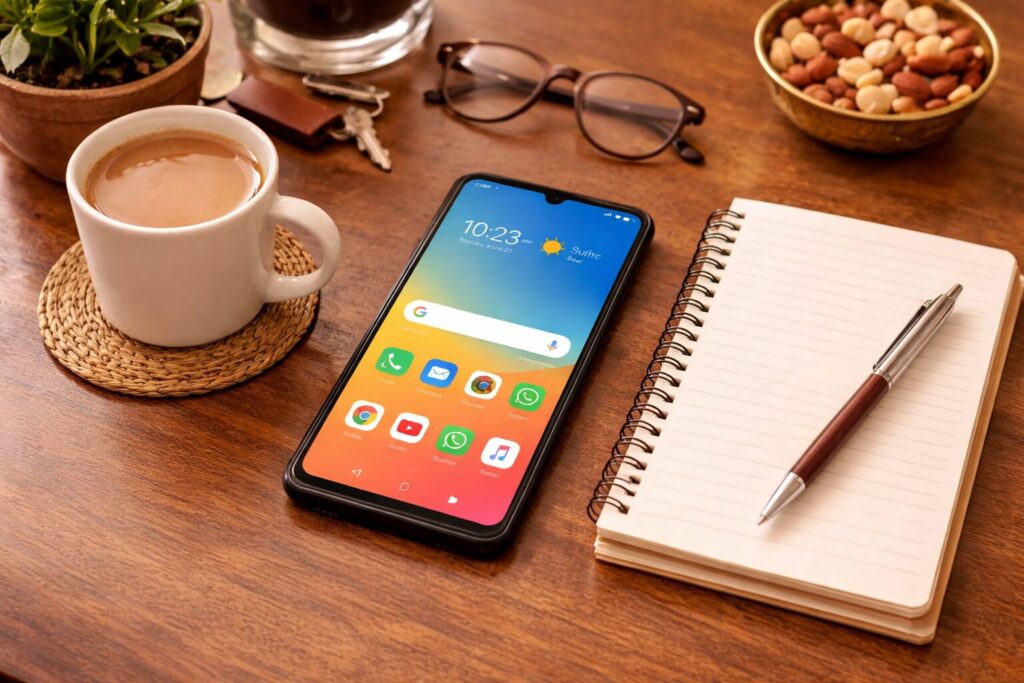
Benchmarks rarely reflect how phones feel after eight months.
A phone that feels fluid today but is loaded with background services may age poorly. Another with modest hardware but clean optimisation may stay usable longer.
In India, performance is often affected by:
- Network switching between 4G and 5G
- Heavy app multitasking
- Background app restrictions
Thermal behaviour matters more than peak speed. Phones that heat quickly tend to throttle, which leads to stutters during normal tasks.
If you game heavily, sustained performance matters more than advertised GPU scores. Many phones perform well for the first ten minutes and degrade sharply after.
If you don’t game, smooth scrolling, quick app switching, and consistent touch response are more important than raw numbers.
Also Read – Best Smartphones Under ₹20,000 in India (2026 Buying Guide)
Software experience is where trust is built — or lost
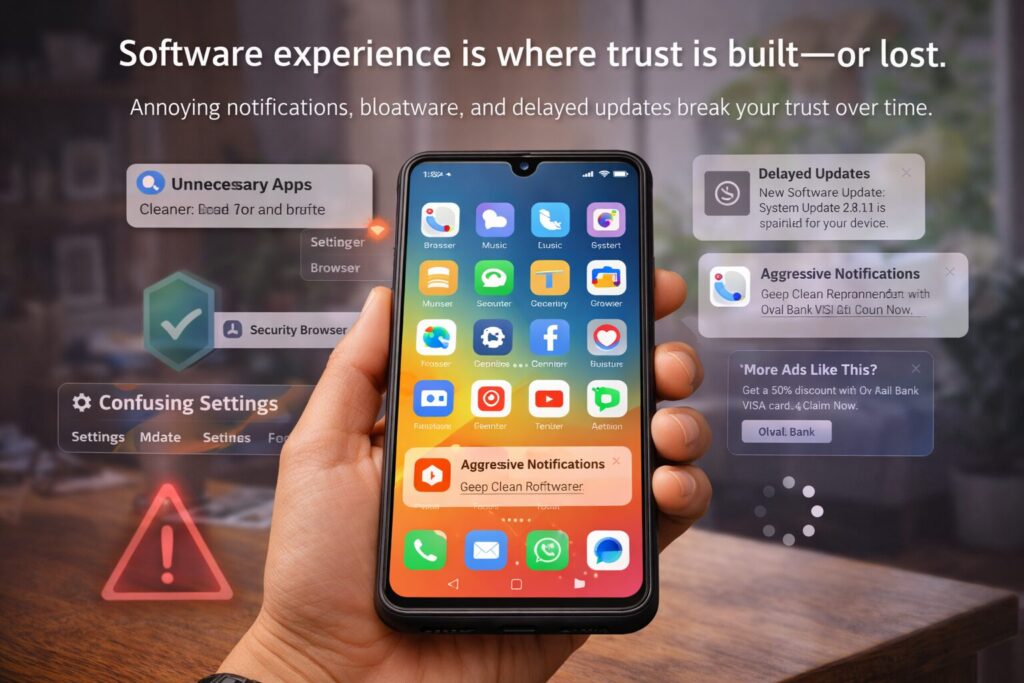
This is the hardest thing to judge before buying, and the most important after.
Software isn’t just about features. It’s about restraint.
Many phones ship with unnecessary apps, aggressive notifications, and confusing settings. Over time, these small annoyances add up.
Updates matter, but not in the way marketing claims. Frequent updates are good only if they don’t break things. Stability matters more than speed.
Another overlooked issue is update transparency. Some brands promise years of updates but quietly delay or stagger rollouts. Others push updates quickly but introduce bugs.
From a user’s perspective, the best software is the one you don’t think about daily.
If a phone constantly reminds you it exists — through alerts, ads, or forced suggestions — it erodes trust.
Network reliability is deeply local in India
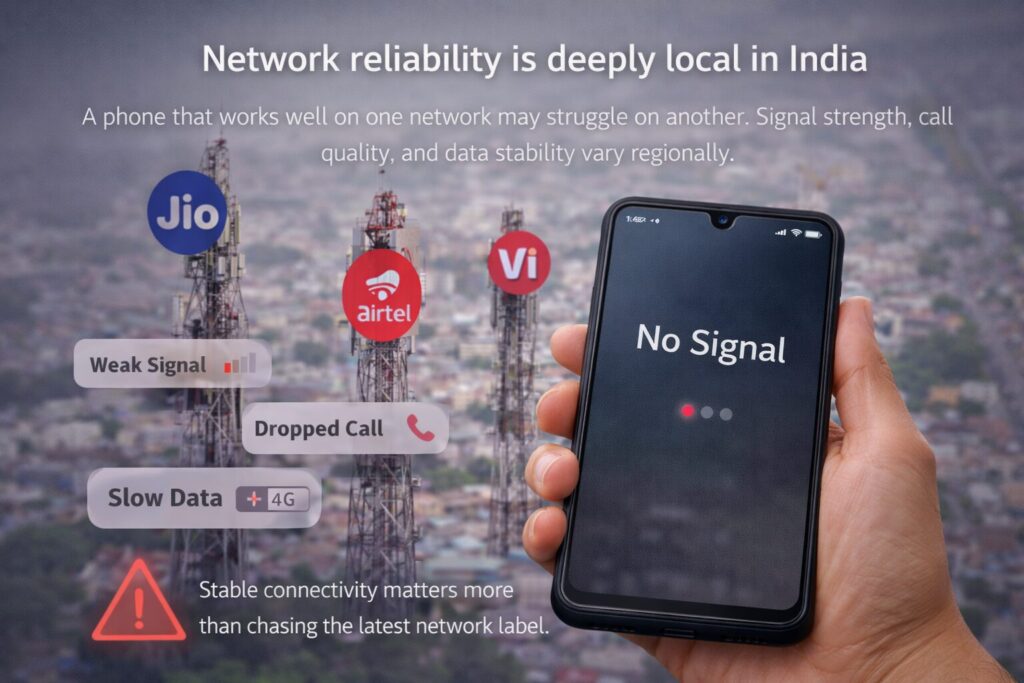
This is rarely discussed properly.
A phone that works perfectly on one network may struggle on another. Signal strength, call quality, and data stability vary across regions.
If you use Jio, Airtel, or Vi, your experience depends not just on the phone but on how well its antennas and modem handle Indian conditions.
Some phones drop calls indoors. Some struggle with handovers between towers. These issues are subtle but frustrating.
If you rely heavily on mobile data or voice calls, look for phones known for stable connectivity rather than chasing the latest network label.
Also read – Motorola to Launch New ‘Signature’ Smartphone Series in India on January 7
Offline service matters more than people admit
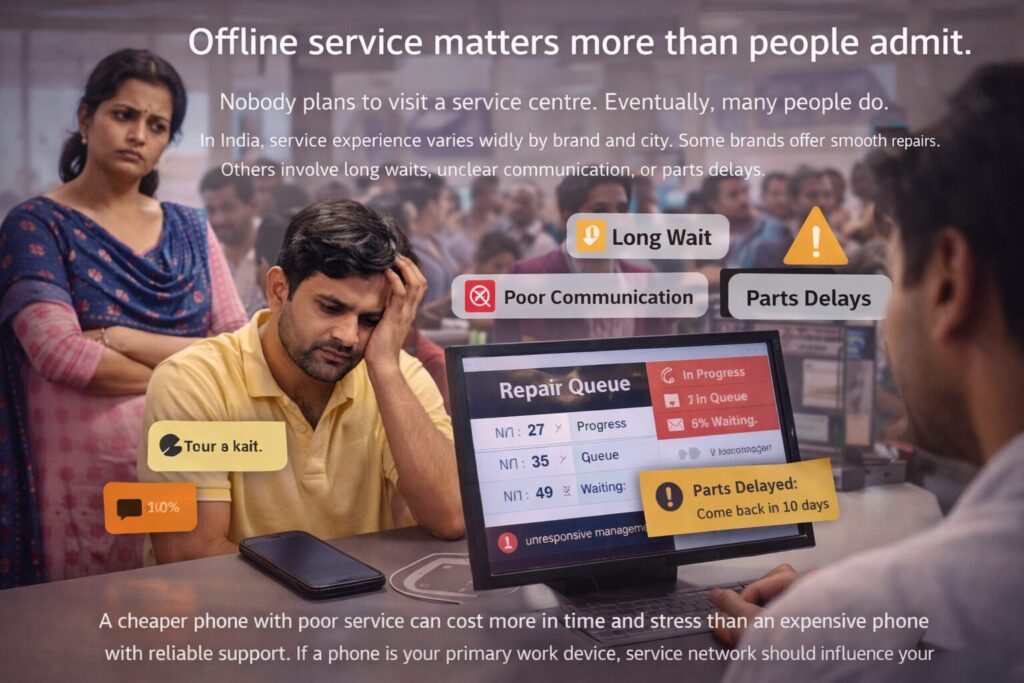
Nobody plans to visit a service centre. Eventually, many people do.
In India, service experience varies wildly by brand and city. Some brands offer smooth repairs. Others involve long waits, unclear communication, or parts delays.
A cheaper phone with poor service can cost more in time and stress than an expensive phone with reliable support.
If a phone is your primary work device, service network should influence your decision more than one extra camera sensor.
Online vs offline buying is a strategic choice
Buying online often gives better prices. Buying offline offers accountability.
Offline stores sometimes include small perks — quick replacements, easier returns, or human explanations. Online platforms offer convenience and aggressive pricing during sales.
Neither is universally better. The right choice depends on how risk-averse you are and how urgently you need the phone.
Impulse buying during sales often leads to regret. Waiting a few weeks can sometimes lead to better pricing without pressure.
Pros & Cons (of modern smartphone buying in India)
Pros
- Wide choice across price segments
- Strong competition improving value
- Frequent sales lowering effective prices
Cons
- Confusing overlap between models
- Marketing-driven specs
- Inconsistent long-term experience
Who should buy thoughtfully (and who shouldn’t)
You should think carefully before buying if:
- You expect a phone to last 3–4 years
- You rely on your phone for work
- You dislike software clutter
You can afford to be casual if:
- You upgrade frequently
- You use your phone lightly
- You tolerate small annoyances
Long-term perspective: the phone you stop noticing is the right one
The best phone isn’t the one you admire daily. It’s the one you forget about.
When a phone quietly does its job — holds charge, takes usable photos, stays responsive, and doesn’t demand attention — it earns trust.
That kind of phone rarely wins spec wars. It wins over time.
FAQs
How much should I realistically spend on a smartphone in India?
Spend based on how long you plan to keep it, not what features excite you today.
Is fast charging bad for battery health?
Not inherently, but heat management matters more than speed.
Are online reviews reliable?
Only if they reflect long-term usage, not first impressions.
Should I wait for sales?
If your phone still works, waiting often improves value.
Final Verdict
Choosing the right smartphone in India is less about finding the “best” phone and more about avoiding the wrong one for your life.
Ignore the hype cycles. Ignore launch-day excitement. Pay attention to how phones behave quietly, over time, in Indian conditions.
That’s where good decisions are made.
[…] How to Choose the Right Smartphone in India: A Complete, Honest Buying Guide (2026) […]
[…] How to Choose the Right Smartphone in India: A Complete, Honest Buying Guide (2026) […]